
The Math of Wealth Building: Compound Interest 101
Most people think saving for retirement is like filling a bucket: you put a dollar in, and now you have a dollar. That’s not how wealth buildins works. Real wealth is built through Compound Interest.
Think of every dollar you save as a worker you’ve hired. In the beginning, you only have a few workers on your crew. They don’t get much done, and you’re still doing all the heavy lifting yourself. But here’s the trick: at the end of every month or quarter, those workers go out and “hire” more workers using the interest they earned.
You don’t have to pay these new workers out of your own pocket—your original crew found them for you. Eventually, you have a massive army of dollars working 24/7. The “tipping point” is when your crew is so big that they do all the work, and you can finally “retire” from being the foreman (putting new money in).
The Math Under the Hood
The actual math follows a specific formula.1 If you want to calculate exactly how your “crew of workers” will grow over time, here is the equation used by banks and investors:
What the letters actually mean:
- A (The Total): The final amount of money you’ll have (your total Snowball).
- P (The Principal): The amount you start with today (your initial crew).
- r (The Rate): Your annual interest rate (expressed as a decimal, so 7% becomes 0.07).
- n (The Frequency): How many times a year the interest is added (for most savings accounts, this is 12 for monthly).
- t (The Time):5 How many years you leave the money alone to roll.
Why this formula matters to you
The most powerful part of this equation is the “t”—the time. Because it is an exponent (it sits up high), every extra year you add doesn’t just add to your wealth; it multiplies it. This is why a $100 contribution at age 25 is worth significantly more than a $100 contribution at age 45.
The goal of being frugal today is to give your “t” as much time as possible to do the heavy lifting.
The Magic of Compounding Visualized
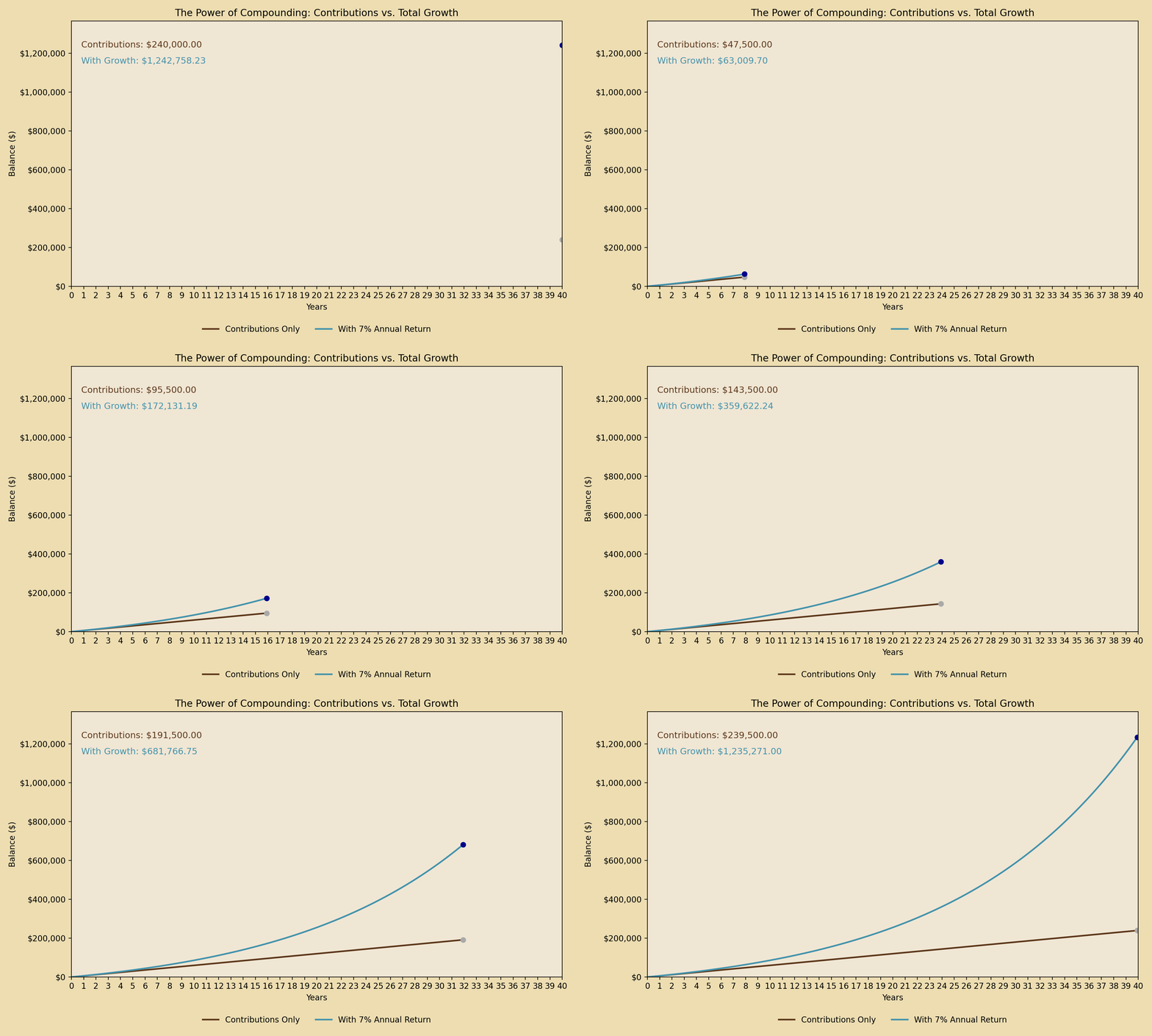
Investing isn’t just about saving money; it’s about putting your money to work. When your money earns interest, and then that interest earns interest, you’ve started a financial snowball. The graph below shows the power of compounding over 40 years. The brown line is the contributions and the blue line shows the growth.
| Years of Investing | Total Contributed | Final Balance (at 7% return) |
| 10 Years | $60,000 | $86,542 |
| 20 Years | $120,000 | $260,463 |
| 30 Years | $180,000 | $609,985 |
| 40 Years | $240,000 | $1,312,231 |
The Takeaway: In 40 years, you only put in $240k of your own money, but the “snowball” added over $1 Million in growth.
Time is Your Greatest Asset: The earlier you start, the more time the snowball has to roll. Even small amounts started in your 20s are worth more than large amounts started in your 40s.
The Average Interest Rate: While the stock market goes up and down, the historical average for the Total US Stock Market is roughly 7-10%. This is the engine of your growth.
Consistency is King: Compounding only works if you keep the snowball moving. Automatic monthly contributions to a 401k or IRA ensure you never miss a beat.
Watch Your Wealth Snowball
Use the calculator below to see the estimated value of any monthly contribution. Enter a monthly amount you can comfortably set aside. Even $50 or $100 a month, when given enough time, can turn into a significant ‘nest egg’ for your future.
The “Key Rule” Section : * Initial Seed: What you start with today.
- The Watering (Monthly Contribution): The consistent amount you add every month.
- The Sunlight (Interest Rate): We recommend testing with 7% or 8% to reflect the long-term average of the stock market.
Ready to start your snowball? [Learn about Traditional vs. Roth IRAs here].